Why Are Bespoke AI Applications the next phase of AI in Enterprise
Feb 16, 2026
Discover how bespoke AI applications enhance business processes, delivering tailored solutions that maximise ROI and align with your unique workflows.

Why Are Bespoke AI Applications the next phase of AI in Enterprise
Struggling to find AI tools that actually fit your business processes instead of forcing you to adapt to generic software? Off-the-shelf AI solutions leave 51% of organisations unable to measure ROI due to poor alignment with real needs. Bespoke AI applications solve this by tailoring machine learning models, data pipelines, and interfaces to your exact workflows, delivering 300-500% ROI within 12-24 months.
Introduction
Generic AI tools promise transformation but often create new problems. Your team spends weeks configuring pre-built platforms that still don't match how you work. Data sits in the wrong format. Features you need are missing while bloated menus slow everyone down.
Bespoke AI applications take a different approach. These custom-built systems align precisely with your business logic, data structures, and user needs. Instead of adapting your processes to fit software limitations, you get AI that fits your reality. In 2026, the intelligent apps market reached $63.42 billion and continues growing at 33.23% annually as more organisations recognise the value of tailored solutions (Mordor Intelligence).
The shift toward customisation reflects a fundamental truth. Every business has unique competitive advantages buried in proprietary data and specialised workflows. Bespoke AI unlocks that value.
What Are Bespoke AI Apps?
Bespoke AI applications are custom-built software systems that use machine learning and artificial intelligence to solve specific business problems. Unlike off-the-shelf products designed for broad markets, these applications are engineered around your data, processes, and strategic goals.
The market for these tailored solutions is exploding. By 2026, 96% of organisations plan to actively manage AI spending, up from just 63% previously (Zylo). This shift signals that businesses are moving beyond experimentation toward strategic, customised implementations.
Key characteristics include:
•Custom data models: Trained on your proprietary datasets, not generic public data
•Workflow integration: Built into existing systems and business processes
•Scalable architecture: Designed to grow with your organisation's needs
•Proprietary algorithms: Optimised for your specific use cases and KPIs
"Bespoke AI applications are becoming mainstream in business operations." - ESLLC (esllc.com)
Key Features of Bespoke AI Apps
Bespoke AI applications stand out through their ability to address unique business requirements that generic tools cannot handle. These systems adapt to your reality rather than forcing you to adapt to theirs.
Hyper-personalisation leads the feature set. In 2026, 71% of consumers expect personalised interactions from businesses (Intuition). Bespoke AI delivers this by learning from your customer data, transaction history, and behavioural patterns. The system evolves as your business evolves.
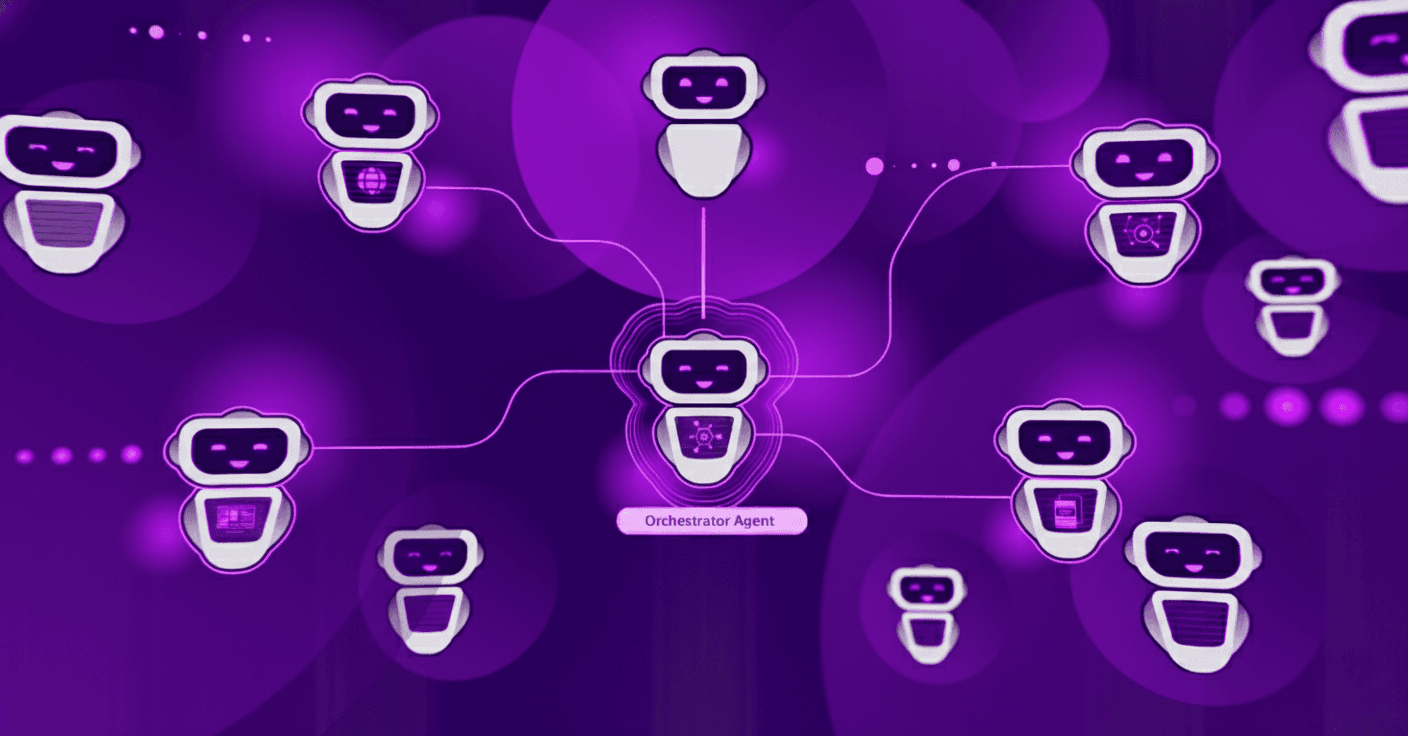
Another critical feature is task-specific intelligence. By the end of 2026, 40% of enterprise applications include specialised AI agents designed for particular workflows (Master of Code). These aren't general chatbots. They're purpose-built tools that understand your industry terminology, compliance requirements, and operational constraints.
Additional capabilities include:
•Real-time adaptation: Models retrain automatically as new data arrives
•Domain-specific accuracy: Higher precision than general-purpose AI
•Custom security controls: Built to meet your exact compliance needs
•Seamless integration: Direct connections to your existing tech stack
How Bespoke AI Apps Work
Bespoke AI applications function through a layered architecture that separates data processing, model training, and user interaction. This modular design allows each component to be optimised for your specific requirements while maintaining flexibility for future changes.
The foundation relies on vertical and modular AI systems. In 2026, 20% of enterprise AI use involves workflow-specific tools like custom GPTs tailored to particular business functions (AppsFlyer). These specialised systems outperform general models because they focus on narrow, well-defined tasks.
Core Components
The data layer ingests information from your existing systems. Custom connectors pull data from CRMs, ERPs, databases, and external APIs. This layer handles cleaning, normalisation, and transformation to prepare data for model training.
The model layer contains the AI algorithms. These can include natural language processing for customer communications, computer vision for quality control, or predictive analytics for demand forecasting. Models are trained exclusively on your data.
Data Flow
Information moves through a continuous pipeline. New data triggers automatic retraining cycles that keep models current. The system monitors performance metrics and flags when accuracy drops below thresholds.
User interfaces present insights and predictions in formats that match your team's workflows. Dashboards, API endpoints, or embedded widgets deliver AI capabilities where people actually work.
Key Processes
Deployment happens in stages. Initial models run in parallel with existing systems to validate accuracy. Gradual rollout minimises disruption while allowing teams to build confidence in AI recommendations.
Ongoing maintenance includes monitoring, retraining, and feature updates. The system logs all predictions and outcomes to continuously improve accuracy.
Benefits of Bespoke AI APP for Businesses
Custom AI applications deliver measurable business value that generic tools struggle to match. The precision and alignment with actual workflows translate directly to financial performance.
Revenue impact is substantial. 71% of companies using AI in marketing and sales report revenue increases (Intuition). High-performing AI-native software companies achieve approximately $40 million ARR in their first year, significantly outpacing traditional SaaS models (Zylo).
Key advantages include:
•Competitive differentiation: Proprietary AI creates barriers competitors can't easily replicate
•Operational efficiency: Automation of complex, company-specific processes
•Data monetisation: Extract value from proprietary datasets
•Faster decision-making: Real-time insights tailored to your business context
•Reduced vendor lock-in: Own your AI infrastructure and intellectual property
The ROI comes from solving problems that off-the-shelf tools ignore. When AI understands your unique processes, it eliminates manual work that generic automation misses.
Bespoke AI vs. Off-the-Shelf Solutions

The choice between custom and pre-built AI involves tradeoffs in cost, time, and strategic value. Understanding these differences helps determine the right approach for your situation.
In 2026, 76% of enterprises prefer off-the-shelf AI solutions for speed and lower upfront costs (Apptunix). However, 45% of large enterprises still invest in custom AI when strategic differentiation matters. The split reflects different priorities across organisation sizes and industries.
Custom AI solutions can yield 300-500% ROI within 12-24 months, compared to off-the-shelf solutions which have lower long-term expenses but limited customisation (One Beyond). The higher initial investment pays off when AI becomes a core competitive advantage.
| Factor | Bespoke AI | Off-the-Shelf |
|--------|-----------|---------------|
| Initial Cost | Higher ($50K-$500K+) | Lower ($500-$5K/month) |
| Time to Deploy | 3-12 months | Days to weeks |
| Customisation | Unlimited | Limited to vendor features |
| Strategic Value | High (proprietary advantage) | Low (competitors use same tools) |
| Long-term ROI | 300-500% in 12-24 months | Variable, often lower |
"Custom AI targets complex needs with higher initial costs but better long-term ROI." - Go-Globe (go-globe.com)
Implementing Bespoke AI APP in Your Business
Successful implementation requires a structured approach that balances technical capabilities with organisational readiness. Rushing deployment is the primary reason 51% of AI projects fail to meet expectations.
In 2026, 72% of companies have adopted AI, with 73.5% prioritising AI investments (Intuition). However, 51% of organisations struggle to measure ROI from AI implementations due to poor data quality and rushed deployments (ThoughtSpot).
Initial Setup
Start with a clear business problem and success metrics. Define what "better" looks like with specific numbers. Identify the data sources you'll need and assess their quality.
Build a cross-functional team including business stakeholders, data scientists, and IT operations. Bespoke AI succeeds when technical capabilities align with business needs.
Select development partners or internal resources with experience in your industry. Domain expertise matters as much as technical skill.
Integration Challenges
Legacy systems often lack APIs or use outdated data formats. Plan for data pipeline development that bridges old and new infrastructure.
Change management is critical. Teams need training not just on using AI tools but on interpreting results and trusting recommendations. Start with low-risk use cases to build confidence.
Security and compliance reviews take time. Budget for legal and security team involvement early in the process.
Ongoing Maintenance
Models degrade as business conditions change. Establish monitoring for accuracy, bias, and performance. Set thresholds that trigger retraining.
Plan for regular updates to features and capabilities. Bespoke AI should evolve with your business strategy.
Document everything. Custom systems require institutional knowledge about why decisions were made and how components interact.
Common Mistakes in Bespoke AI APP Development
Organisations repeatedly make predictable errors that undermine AI projects. Avoiding these pitfalls significantly improves success rates.
51% of organisations fail to achieve expected outcomes from AI due to rushed deployments and poor data quality (Intuition). The most common mistake is treating AI as a simple purchase rather than a capability that requires ongoing investment.
Critical errors to avoid:
•Skipping data quality assessment: Garbage in, garbage out applies to AI
•Ignoring governance until crises: Leads to sensitive data leaks and project freezes
•Underestimating change management: Technical success means nothing if users don't adopt
•Lack of clear metrics: Without measurable goals, you can't prove value
•Insufficient testing: Deploying models without validation in production-like conditions
"Skipping governance until crises can lead to sensitive leaks and project freezes." - Mid Hudson Web (midhudsonweb.com)
Another frequent mistake is choosing the wrong problems to solve first. Start with high-value, well-defined use cases where data is abundant and stakeholders are engaged.
Future of Bespoke AI APPS in Business
The trajectory for custom AI applications points toward increased accessibility and sophistication. What once required massive budgets is becoming feasible for mid-market organisations.
The global AI market is expected to grow at 36.6% annually through 2030, potentially adding $15.7 trillion to the global economy (Intuition). This growth is driven by falling development costs and rising competitive pressure to differentiate.
By 2026, 88% of organisations are using AI tools in at least one business function (Zapier). The trend is moving from experimentation to strategic deployment of bespoke solutions that create defensible competitive advantages.
Emerging capabilities include hyper-customisation at scale. New development frameworks allow faster creation of specialised AI agents. What took months to build in 2024 now takes weeks in 2026.
The democratisation of AI development tools means smaller organisations can compete with enterprise budgets. Low-code AI platforms and pre-trained foundation models reduce the technical barrier to entry. However, strategic advantage still comes from proprietary data and unique business logic.
Conclusion
Bespoke AI applications represent a fundamental shift from one-size-fits-all software to systems that adapt to your business. The 300-500% ROI potential reflects real value from solving problems that generic tools ignore.
Success requires treating AI as a strategic capability, not a simple purchase. Organisations that invest in data quality, clear metrics, and change management see measurable returns. Those that rush deployment or skip governance join the 51% who fail to achieve expected outcomes. The choice between custom and off-the-shelf AI depends on whether differentiation matters to your competitive strategy.
Frequently Asked Questions
How much do bespoke AI applications cost in the United States?
Bespoke AI applications in the United States typically range from $50,000 to $500,000+ depending on complexity and scope. Development costs include data engineering, model training, integration, and testing. United States enterprises often see 300-500% ROI within 12-24 months through operational efficiency gains and revenue increases, making the upfront investment worthwhile for strategic applications.
What industries in the United States benefit most from bespoke AI?
Healthcare, financial services, manufacturing, and retail lead bespoke AI adoption in the United States. These industries have proprietary data and complex workflows that generic tools can't address. For example, United States hospitals use custom AI for patient risk prediction using their specific EHR data, while manufacturers deploy vision systems trained on their unique product defects.
How long does it take to deploy a bespoke AI application?
Deployment timelines range from 3 to 12 months depending on project scope and data readiness. Initial proof-of-concept phases take 6-8 weeks, followed by full development and testing. Organisations with clean, accessible data and clear requirements deploy faster. The 72% of companies that have adopted AI in 2026 typically start with smaller pilots before scaling.
Can bespoke AI integrate with existing business systems?
Yes, bespoke AI applications are designed specifically to integrate with your existing tech stack. Custom connectors link to CRMs, ERPs, databases, and APIs. Integration challenges arise with legacy systems lacking modern APIs, requiring data pipeline development. Successful implementations include IT operations early to address security, compliance, and infrastructure requirements.
What's the difference between bespoke AI and AI-powered SaaS?
Bespoke AI is custom-built for your specific needs and data, while AI-powered SaaS offers pre-built features for broad markets. Bespoke solutions provide unlimited customisation and proprietary competitive advantages but require higher upfront investment. AI SaaS deploys faster at lower cost but offers limited differentiation since competitors use the same tools. The 76% of enterprises using off-the-shelf solutions prioritise speed, while the 45% investing in custom AI prioritise strategic value.
BLOGS