
Complete Guide to AI Agents for Business and Tech
Feb 15, 2026
Discover how AI agents enhance business operations. Learn their impact on efficiency and decision-making in modern enterprises.
Complete Guide to AI Agents for Business and Tech
Wondering how AI agents can transform your business operations in 2026? Organizations across the United States are deploying autonomous AI systems that handle tasks without human intervention. This guide breaks down what AI agents are, how they work, and why 40% of enterprise applications now include them.
Introduction
AI agents have moved from experimental tools to core business infrastructure. These autonomous systems perceive their environment, make decisions, and take actions to achieve specific goals. Unlike traditional software that follows rigid scripts, AI agents adapt to changing conditions and learn from outcomes.
The shift is happening fast. The global AI agents market reached $11.55 billion in 2026, up from $7.92 billion in 2025. Companies aren't just testing these systems anymore. They're deploying them at scale to automate customer service, optimize supply chains, and accelerate software development. The technology has matured enough that 80% of Fortune 500 companies now run active AI agents in production environments.
What Are AI Agents?
AI agents are software systems that autonomously perform tasks by perceiving their environment, making decisions, and taking actions to achieve defined goals. They operate independently within set parameters, learning from interactions to improve performance over time. Organisations use AI agents to handle everything from customer inquiries to complex data analysis without constant human oversight.
The market growth tells the story. The global AI agents market reached $11.55 billion in 2026, growing from $7.92 billion in 2025 at a compound annual growth rate of 45.82% (Grand View Research). This explosive growth reflects real business adoption.
Key characteristics of AI agents include:
•Autonomy: Operate without continuous human direction
•Reactivity: Respond to environmental changes in real-time
•Proactivity: Take initiative to achieve goals
•Learning: Improve performance through experience
•Goal-oriented: Work toward specific, measurable outcomes
"40% of enterprise applications are expected to include task-specific AI agents by the end of 2026, up from less than 5% in 2025." - Fortune Business Insights (fortunebusinessinsights.com)
Types of AI Agents
AI agents come in several distinct categories, each designed for specific use cases and complexity levels. Understanding these types helps organizations select the right approach for their needs.
Simple reflex agents react to current conditions using predefined rules. They don't maintain memory of past interactions. Think of a thermostat that turns on heating when temperature drops below a threshold.
Model-based agents maintain an internal representation of their environment. They track how the world changes and how their actions affect it. These agents handle more complex scenarios where context matters.
Goal-based agents work toward specific objectives. They evaluate different action sequences to determine which path best achieves their goals. Customer service chatbots that resolve issues fall into this category.
Utility-based agents optimize for the best outcome when multiple solutions exist. They assign values to different states and choose actions that maximize expected utility. Recommendation engines use this approach.
Learning agents improve their performance over time through experience. They adapt strategies based on feedback and outcomes. Most modern AI agents incorporate learning capabilities to handle evolving business conditions.
The agentic AI market reflects this diversity. It's projected to reach $52.62 billion by 2030, growing from $7.84 billion in 2025 at a CAGR of 46.3% (Beam.ai). Adoption varies by organization size and industry. 35% of organizations report broad adoption of AI agents, while 27% have limited adoption and 17% have fully implemented agents company-wide (IBM).
How Do AI Agents Work?
AI agents operate through a continuous cycle of perception, decision-making, and action. They gather data from their environment, process it using algorithms and models, then execute tasks based on their analysis. This cycle repeats, allowing agents to respond to changing conditions and refine their approach over time.
The architecture typically includes sensors for data collection, a reasoning engine for decision-making, and actuators for taking action. Modern agents leverage large language models, machine learning algorithms, and domain-specific knowledge bases to handle complex scenarios.
Core Components
Every AI agent contains three essential elements. Sensors collect information from the environment through APIs, databases, user inputs, or IoT devices. Processing units analyze this data using machine learning models, rule engines, or neural networks. Actuators execute decisions by triggering workflows, sending messages, updating systems, or controlling physical devices.
The sophistication varies by agent type. Simple agents use basic if-then logic. Advanced agents employ deep learning models that process millions of parameters to make nuanced decisions.
Data Flow
Information moves through AI agents in a structured pipeline. Raw data enters through sensors and gets normalized into a standard format. The agent's reasoning engine evaluates this data against its goals and constraints. It generates possible actions and scores them based on expected outcomes.
The highest-scoring action gets executed through actuators. Feedback from the action's results flows back into the system, creating a learning loop. This continuous feedback mechanism allows agents to improve accuracy and effectiveness over time.
Key Processes
AI agents rely on several critical processes to function effectively. Natural language processing enables them to understand and generate human language. Machine learning allows them to identify patterns and make predictions from data. Decision trees help them evaluate multiple options systematically.
Reinforcement learning teaches agents through trial and error, rewarding successful actions. Knowledge graphs provide structured information about relationships between entities. These processes work together to create intelligent, adaptive systems.
By the end of 2026, AI agents are expected to handle 40% of enterprise applications, significantly increasing from less than 5% in 2025 (Goldman Sachs). The adoption rate is accelerating. 79% of organizations have implemented AI agents, with 96% planning to expand their use in 2026 (Deloitte).
Benefits of AI Agents
AI agents deliver measurable value across multiple business dimensions. They reduce operational costs, improve response times, and free human workers for higher-value tasks.
The ROI is substantial. Organizations report 5x-10x returns on AI agent investments, with 88% of executives seeing early returns (OneReach). These aren't projections. They're actual results from production deployments.
Key benefits include:
•Productivity gains: AI agents boost productivity by 20-30%, with 66% of adopters reporting increased output (PwC)
•24/7 availability: Agents work continuously without breaks or downtime
•Scalability: Handle thousands of simultaneous tasks without additional headcount
•Consistency: Execute processes the same way every time, reducing errors
•Cost reduction: Automate repetitive tasks that previously required human labor
The productivity improvements are particularly striking in customer service and data analysis roles. Agents handle routine inquiries instantly, escalating only complex cases to human specialists. This allows support teams to focus on high-value interactions that require empathy and creative problem-solving.
AI Agents in Software Development
Software development has become a primary battleground for AI agent adoption. Developers use agents to write code, debug applications, review pull requests, and optimize performance. The impact is transforming how teams build software.
In 2026, 41% of worldwide code is projected to be AI-generated, with 84% of developers using AI tools and 75% of new apps created with AI assistance (Databricks). This isn't replacing developers. It's amplifying their capabilities.
AI coding agents handle boilerplate code, suggest optimizations, and catch bugs before they reach production. They analyze codebases to identify security vulnerabilities and recommend fixes. Some agents even generate entire features from natural language descriptions.
The developer experience is changing fundamentally. Instead of writing every line of code manually, developers describe what they want to build. Agents generate initial implementations that developers then refine and customize. This shifts the role from pure coding to architectural design and quality control.
57% of developers expect major near-term impacts on software development from AI agents (Anthropic). The technology is mature enough that most development teams now incorporate AI agents into their standard workflow. United States tech companies lead this adoption, with Silicon Valley firms reporting the highest integration rates.
Examples of AI Agents in Action
Real-world deployments show the breadth of AI agent applications across industries. These aren't theoretical use cases. They're production systems handling millions of transactions.
Over 80% of Fortune 500 companies are using active AI agents built via low-code/no-code tools as of early 2026 (Microsoft). The deployment patterns reveal where agents deliver the most value.
Common implementations include:
•Customer service agents: Handle inquiries, process returns, and resolve common issues without human intervention
•Sales assistants: Qualify leads, schedule meetings, and provide product information to prospects
•Data analysis agents: Monitor dashboards, detect anomalies, and generate insights from business metrics
•DevOps agents: Manage deployments, monitor system health, and automatically remediate common infrastructure issues
•Content creation agents: Generate marketing copy, product descriptions, and social media posts
Financial services companies use agents to detect fraudulent transactions in real-time. Healthcare organizations deploy them to schedule appointments and answer patient questions. Retailers rely on agents for inventory optimisation and personalised product recommendations.
The scale of deployment is accelerating. 51% of organizations have AI agents running in production, with 78% planning near-term rollout (Futurum Group). This rapid adoption reflects growing confidence in the technology's reliability and business value.
Best Practices for Using AI Agents
Successful AI agent deployments follow consistent patterns. Organizations that achieve the best results approach implementation systematically.
Start with well-defined use cases that have clear success metrics. Don't try to automate everything at once. Pick high-volume, repetitive tasks where agents can deliver immediate value. Customer service inquiries and data entry are common starting points.
Establish governance frameworks before deployment. Define what agents can and cannot do. Set up approval workflows for high-stakes decisions. Monitor agent actions to ensure they align with business policies and ethical standards.
82% of companies are using AI agents, with 80% of Fortune 500 firms deploying active agents (Master of Code). The leaders in this space share common practices.
Focus on these critical areas:
•Data quality: Agents are only as good as the data they access. Clean, well-structured data is essential.
•Human oversight: Keep humans in the loop for complex decisions and edge cases.
•Continuous monitoring: Track agent performance and intervene when behavior drifts.
•Iterative improvement: Regularly update agent models based on new data and feedback.
•Security controls: Implement strict access controls and audit trails for agent actions.
70% of leaders view agentic AI as strategically vital and market-ready, with 76% pushing for hands-on testing (Goldman Sachs). This executive-level support is crucial for successful adoption. Without leadership buy-in, AI agent initiatives often stall in pilot phases.
Future Trends in AI Agent Usage
The AI agent landscape is evolving rapidly. Several trends will shape how organizations use these systems over the next few years.
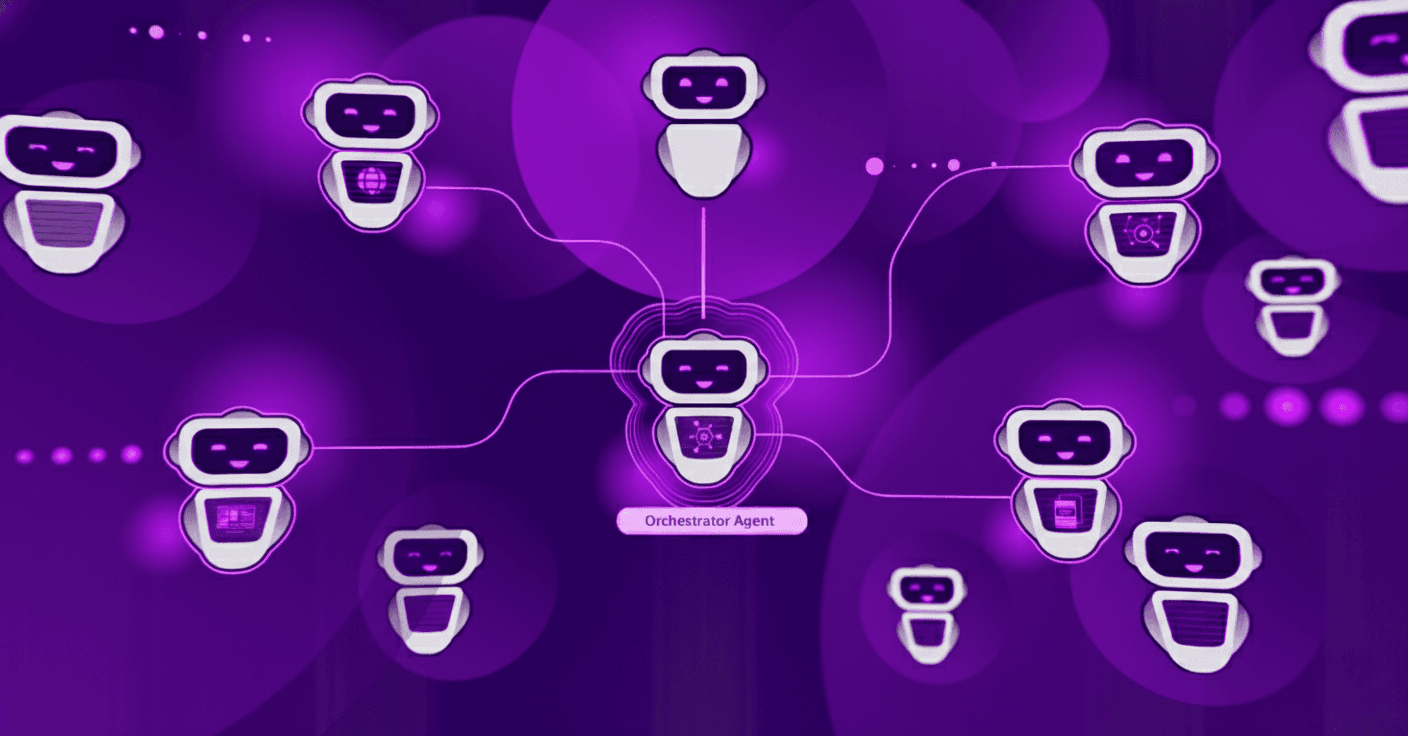
Multi-agent systems are emerging as the next frontier. Instead of single agents working in isolation, organizations are deploying teams of specialized agents that collaborate. One agent might gather data, another analyzes it, and a third takes action based on the analysis. This division of labor mirrors human team structures.
The AI agent market is projected to reach $8.81 billion in 2026, up from $7.12 billion in 2025, with a CAGR of 24.95% through 2032 (Research and Markets). This growth reflects both expanding use cases and deeper integration into existing business processes.
Technological Advancements
Agent capabilities are advancing on multiple fronts. Improved natural language understanding allows agents to handle more nuanced conversations. Better reasoning engines enable them to tackle complex, multi-step problems. Enhanced learning algorithms help them adapt faster to new situations.
Integration with emerging technologies is accelerating. Agents are connecting to IoT sensors for real-time environmental data. They're leveraging blockchain for secure, transparent decision trails. Quantum computing may eventually enable agents to solve optimization problems that are currently intractable.
Market Growth
Investment in AI agents continues to surge. 92% of businesses plan investment increases in AI agents from 2025-2027 (Master of Code). This capital is funding both technology development and deployment initiatives.
The United States leads in AI agent adoption, particularly in technology, financial services, and healthcare sectors. Regional variations exist, with coastal tech hubs showing higher integration rates than other areas. However, adoption is spreading rapidly across all industries and geographies.
Regulatory Changes
Governments are beginning to establish frameworks for AI agent governance. These regulations will shape how organizations deploy and manage autonomous systems. Expect requirements around transparency, accountability, and human oversight.
The European Union's AI Act provides a template that other regions may follow. It classifies AI systems by risk level and imposes stricter requirements on high-risk applications. United States regulators are watching these developments closely and may introduce similar frameworks.
Conclusion
AI agents have transitioned from experimental technology to essential business infrastructure. They deliver measurable ROI through productivity gains, cost reduction, and improved customer experiences. The technology is mature enough for production deployment across most industries.
Success requires thoughtful implementation. Start with clear use cases, establish governance frameworks, and maintain human oversight. Monitor agent performance continuously and iterate based on results. Organizations that follow these practices are seeing 5x-10x returns on their AI agent investments.
Frequently Asked Questions
How much do AI agents cost to implement?
AI agent costs vary widely based on complexity and scale, ranging from $5,000 for simple chatbots to $500,000+ for enterprise-wide deployments. In the United States, mid-market companies typically spend $50,000-$150,000 for initial implementations. Cloud-based platforms offer pay-as-you-go pricing starting at $0.10 per conversation, making entry costs more accessible for smaller organizations.
What industries in the United States are adopting AI agents fastest?
Financial services, healthcare, and technology sectors lead AI agent adoption in the United States, with 80% of Fortune 500 companies deploying active agents. Silicon Valley tech firms show the highest integration rates, followed by New York financial institutions. Retail and manufacturing sectors are accelerating adoption, with 51% of organizations running production agents and 78% planning near-term rollouts.
Can AI agents handle complex decision-making tasks?
AI agents excel at structured decision-making within defined parameters, processing thousands of variables faster than humans. They handle 40% of enterprise applications in 2026, up from less than 5% in 2025. However, they work best with human oversight for high-stakes decisions requiring ethical judgment or creative problem-solving. Most organisations use agents for routine decisions while escalating complex cases to human specialists.
How do AI agents compare to traditional automation tools?
AI agents differ from traditional automation by learning from experience and adapting to changing conditions, while traditional tools follow fixed scripts. Agents handle unstructured data and natural language, making them suitable for customer interactions and complex analysis. Organisations report 20-30% productivity gains from AI agents versus 10-15% from traditional automation. The trade-off is higher implementation complexity and ongoing monitoring requirements.
What technical requirements are needed to deploy AI agents?
Deploying AI agents requires cloud infrastructure or on-premise servers, clean structured data, and API integrations with existing systems. Most platforms need 84% of developers using AI tools to support implementation and customisation. Organisations should budget 3-6 months for initial deployment, including data preparation, model training, and testing phases. United States companies typically start with pilot projects before scaling to full production environments.
BLOGS