Building No-Code AI Agents for Non-Technical Teams
Feb 20, 2026

Building No-Code AI Agents for Non-Technical Teams
Struggling to build AI solutions when your team lacks coding expertise? Over 80% of Fortune 500 companies now use AI agents built with no-code tools in 2026. This shift empowers non-technical teams to create powerful automation without writing a single line of code.
Introduction
Building AI agents used to require specialized developers and months of development time. That barrier has collapsed. No-code platforms now let marketing managers, operations teams, and business analysts build sophisticated AI agents in hours instead of weeks.
The change is happening fast. The global AI agents market reached $11.55 billion in 2026, growing at 45.82% annually through 2034. This explosive growth reflects a fundamental shift in who can build AI solutions. You no longer need a computer science degree to deploy intelligent automation that handles customer inquiries, processes documents, or manages workflows.
What Is No-Code AI Agent Development?
No-code AI agent development is a visual approach to building autonomous systems that use artificial intelligence to complete tasks without traditional programming. These platforms provide drag-and-drop interfaces where users assemble AI capabilities like building blocks. The agent can reason over data, make decisions, and execute multi-step workflows based on business logic you define.
The democratization is real. According to Microsoft, over 80% of Fortune 500 companies are using AI agents built with low-code or no-code tools in 2026.
Key characteristics include:
Visual builders: Drag-and-drop interfaces replace coding syntax
Pre-built templates: Industry-specific starting points for common use cases
LLM integration: Connect to GPT-4, Claude, or other language models without API expertise
Enterprise connectors: Built-in links to Salesforce, SAP, Slack, and other business tools
"No-code platforms democratize AI agent development, enabling rapid deployment and accessibility for non-technical users." - Tech Innovations Research (nocodestartup.io)
Key Features of No-Code AI Agents
Modern no-code platforms share core capabilities that make AI accessible. These features transform complex AI concepts into visual workflows anyone can understand.
The most critical features include:
Visual workflow builders: Map out agent logic using flowcharts instead of code
Natural language processing: Agents understand and respond to human language
Multi-step reasoning: Chain together decisions across multiple data sources
Real-time learning: Agents improve performance based on user feedback
Enterprise security: Role-based access and data encryption built in
By the end of 2026, LangChain reports that 40% of enterprise applications will include task-specific AI agents, up from under 5% previously. This rapid adoption reflects how essential these features have become for business operations.
How No-Code AI Agents Work
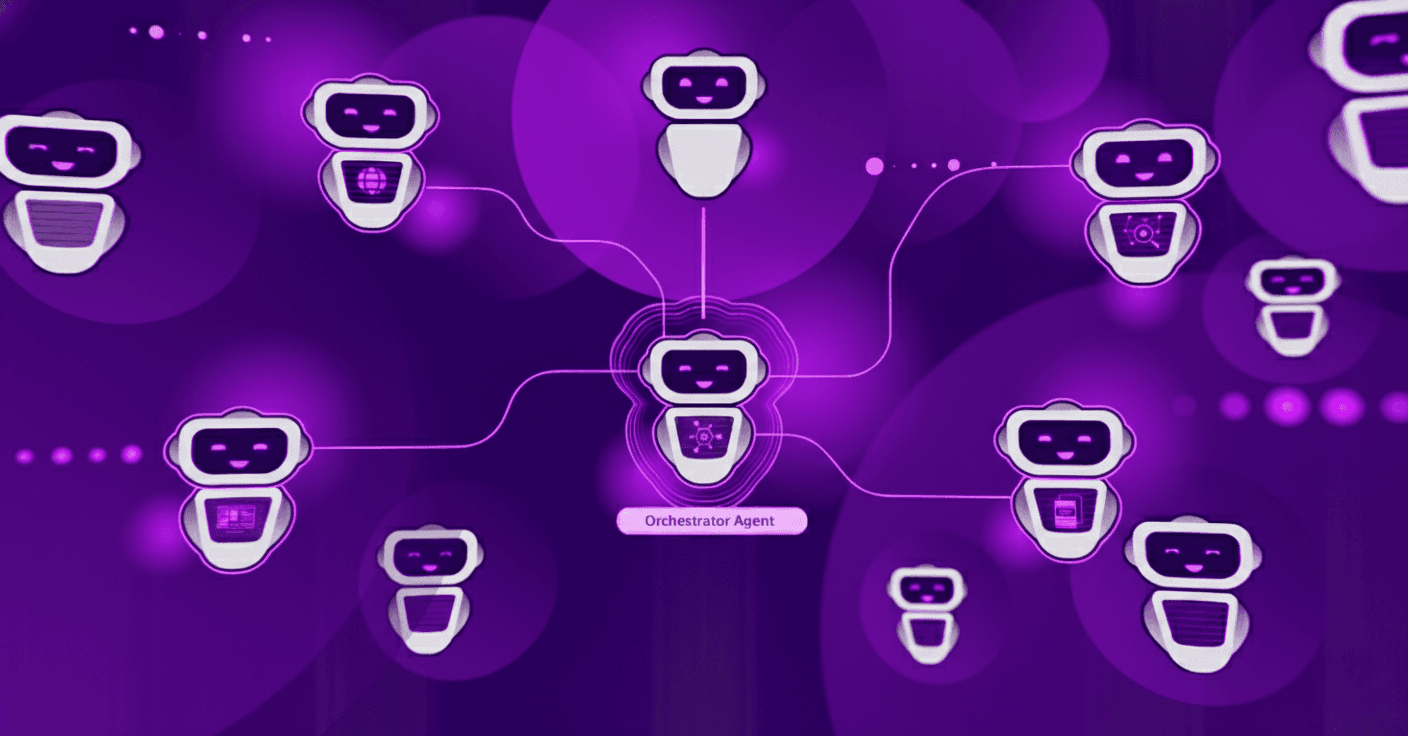
The architecture behind no-code AI agents separates the user interface from the underlying AI engine. You design the agent's behavior through visual tools while the platform handles the complex machine learning operations behind the scenes.
Core Components
Every no-code AI agent contains three fundamental parts. The decision engine processes inputs and determines actions. The knowledge base stores information the agent references. The integration layer connects to external systems and data sources.
These components work together seamlessly. You define rules and logic through the visual interface. The platform translates your design into executable AI workflows.
Data Flow
Information moves through the agent in a clear path. User input enters through a channel like chat or email. The agent processes this input against its knowledge base and decision rules. It then executes the appropriate action and returns a response.
LangChain found that 51% of organizations have AI agents in production, with 78% planning deployment soon. This operational integration shows how reliable the data flow has become.
Key Processes
The agent follows a consistent cycle. It receives a request, analyzes context, retrieves relevant information, makes a decision, and executes an action. This happens in 15-60 minutes of setup time using visual builders and templates, according to Master of Code.
The speed comes from pre-built components. You don't configure every detail from scratch. Instead, you customize proven templates for your specific needs.
Benefits of No-Code AI for Non-Technical Teams
The financial impact is substantial. Organizations using no-code platforms achieve an average annual savings of $187,000 and 40% faster time-to-market compared to custom development, according to Mind Studio.
The advantages extend beyond cost:
Speed: Deploy agents in days instead of months
Accessibility: Business users build solutions without IT bottlenecks
Flexibility: Modify agents quickly as requirements change
Scalability: Start small and expand without rebuilding infrastructure
Risk reduction: Test ideas rapidly before major investments
By 2026, Grand View Research projects that 70% of new enterprise applications will use no-code or low-code solutions. This trend highlights how essential these tools have become for non-technical teams competing in fast-moving markets.
Practical Applications Across Industries
Manufacturing leads AI adoption. BDO reports that 51% of manufacturers already use AI, with 80% stating it will be essential by 2030. These companies deploy no-code agents for quality control, predictive maintenance, and supply chain optimization.
Healthcare organizations use no-code agents to schedule appointments, triage patient inquiries, and process insurance claims. Financial services firms build agents that detect fraud, assess loan applications, and provide personalized investment advice. Retail teams create agents that manage inventory, handle customer service, and optimize pricing.
The AI-in-manufacturing market alone is projected to reach $230.95 billion by 2034, growing at 44.20% annually from 2024 to 2034, according to Deloitte. This massive investment shows how critical AI has become across sectors.
"AI is no longer a pilot project; it has become an operational necessity across industries." - BDO Industry Analysis (bdo.com)
Challenges in Building No-Code AI Agents
The barriers are real despite the promise. LangChain found that 62% of businesses exploring no-code AI solutions lack a clear starting point. Another 41% treat them as side projects, which limits scalability and impact.
Common obstacles include:
Governance gaps: Unclear ownership and approval processes slow deployment
Data quality issues: Agents perform poorly when trained on incomplete information
Integration complexity: Connecting to legacy systems requires technical expertise
Performance reliability: Agents sometimes produce inconsistent results
ROI uncertainty: Measuring business value remains difficult for many teams
Over 40% of agency AI projects may be canceled by 2027 due to poor governance and unproven ROI, according to Mind Studio. This high failure rate underscores the importance of proper planning and realistic expectations.
Future Trends in No-Code AI
The market is expanding rapidly. The no-code AI platform market is valued at $4.88 billion in 2026, projected to reach between $12.25 billion and $152.2 billion by 2035, according to Mordor Intelligence.
Several trends are shaping the future. Platforms are adding more sophisticated AI models that handle complex reasoning tasks. Integration capabilities are expanding to cover more enterprise systems. Governance tools are improving to address compliance and security concerns.
Fortune Business Insights expects 65% of enterprises to adopt no-code or low-code solutions by 2026. This widespread adoption will drive innovation in platform capabilities and use cases.
"The future of AI development lies in no-code platforms, which will enable rapid innovation and deployment." - Innovation Labs (nocodestartup.io)
Getting Started with No-Code AI Agents
The first step is choosing the right platform for your needs. Consider your team's technical skills, integration requirements, and budget constraints. Most platforms offer free trials that let you test capabilities before committing.
Choosing the Right Platform
Evaluate platforms based on specific criteria. Check which AI models they support. Review their integration catalog to ensure compatibility with your existing tools. Assess their security features and compliance certifications.
Grand View Research reports that 80% of IT teams are using low-code tools, indicating strong industry momentum. Look for platforms with active user communities and comprehensive documentation.
Designing Your AI Agent
Start with a clear use case. Define what task the agent should handle and what success looks like. Map out the conversation flow or decision tree before building.
Organizations can reduce development time by 90% using no-code platforms, according to Mind Studio. This speed advantage lets you iterate quickly based on user feedback.
Testing and Deployment
Test thoroughly before full deployment. Run the agent through various scenarios to identify edge cases. Gather feedback from a small user group first.
Monitor performance after launch. Track metrics like task completion rate, user satisfaction, and error frequency. Use this data to refine the agent's behavior and expand its capabilities over time.
Conclusion
No-code AI agents have transformed who can build intelligent automation. The barriers that once required specialized developers have fallen. Marketing teams, operations managers, and business analysts now create sophisticated AI solutions without writing code.
The market growth reflects this shift. Billions of dollars are flowing into no-code platforms as enterprises recognize their strategic value. The combination of speed, accessibility, and cost savings makes these tools essential for teams competing in fast-moving markets.
Frequently Asked Questions
How much do no-code AI platforms cost in the United States?
Most no-code AI platforms use subscription pricing starting at $50-500 per month for basic plans. Enterprise tiers range from $1,000-10,000 monthly depending on usage volume and features. United States companies save an average of $187,000 annually by using no-code platforms instead of custom development, making the ROI compelling for most teams.
Which United States industries are adopting no-code AI agents fastest?
Manufacturing leads adoption in the United States, with 51% already using AI and 80% calling it essential by 2030. Financial services and healthcare follow closely, driven by regulatory compliance needs and customer service demands. The AI-in-manufacturing market alone will reach $230.95 billion by 2034, showing massive United States investment in this technology.
What technical skills do teams need to build no-code AI agents?
Teams need basic computer literacy and understanding of business processes, not coding skills. Platforms let users build agents in 15-60 minutes using visual builders and templates. The learning curve is similar to mastering spreadsheet software. Most organizations train non-technical staff in 1-2 days to start building simple agents.
How do no-code AI agents compare to custom-coded solutions?
No-code platforms deliver 40% faster time-to-market and reduce development costs by 90% compared to custom coding. However, custom solutions offer more flexibility for highly specialized use cases. For most business applications, no-code agents provide sufficient capability with dramatically lower cost and complexity. The choice depends on your specific requirements and technical resources.
What are the main risks when implementing no-code AI agents?
Over 40% of agency AI projects may be canceled by 2027 due to poor governance and unproven ROI. The biggest risks include treating agents as side projects rather than strategic initiatives, lacking clear ownership, and deploying without proper testing. Teams should establish governance frameworks, measure performance metrics, and start with well-defined use cases to minimize these risks.
BLOGS