AI Automation Solutions
Mar 2, 2026

AI Automation Solutions
Businesses are drowning in repetitive tasks that drain budgets and slow growth. Manual data entry, customer support tickets, and report generation consume hours that could drive innovation. AI automation eliminates this waste by combining artificial intelligence with process automation to handle routine work at scale.
Introduction
Organizations across the United States are shifting from traditional automation to AI-powered systems that learn and adapt. The difference is significant. Traditional automation follows rigid rules and breaks when conditions change. AI automation uses machine learning to handle exceptions, improve over time, and make decisions without constant human oversight.
This shift is accelerating. According to Forrester, 88% of companies report using AI in at least one business function, up from 78% the previous year. The technology has moved from experimental pilots to core operations. Companies are automating customer service, financial analysis, supply chain management, and recruitment processes.
What Is AI Automation?
AI automation integrates artificial intelligence with automation processes to handle repetitive tasks, enhance decision-making, and scale operations across industries. Unlike traditional automation that executes predefined rules, AI automation adapts to new patterns and improves performance through machine learning.
The technology combines several capabilities:
Machine learning models that identify patterns in data and predict outcomes
Natural language processing that understands and generates human language
Computer vision that analyzes images and video content
Robotic process automation that executes tasks across multiple systems
"AI automation integrates artificial intelligence with automation processes to handle repetitive tasks, enhance decision-making, and scale operations across industries." — Phenom, 2026 (phenom.com)
Key Features of AI Automation
AI automation platforms in 2026 share several defining characteristics. They process unstructured data like emails and documents. They make decisions based on context rather than rigid rules. They improve accuracy through continuous learning from new data.
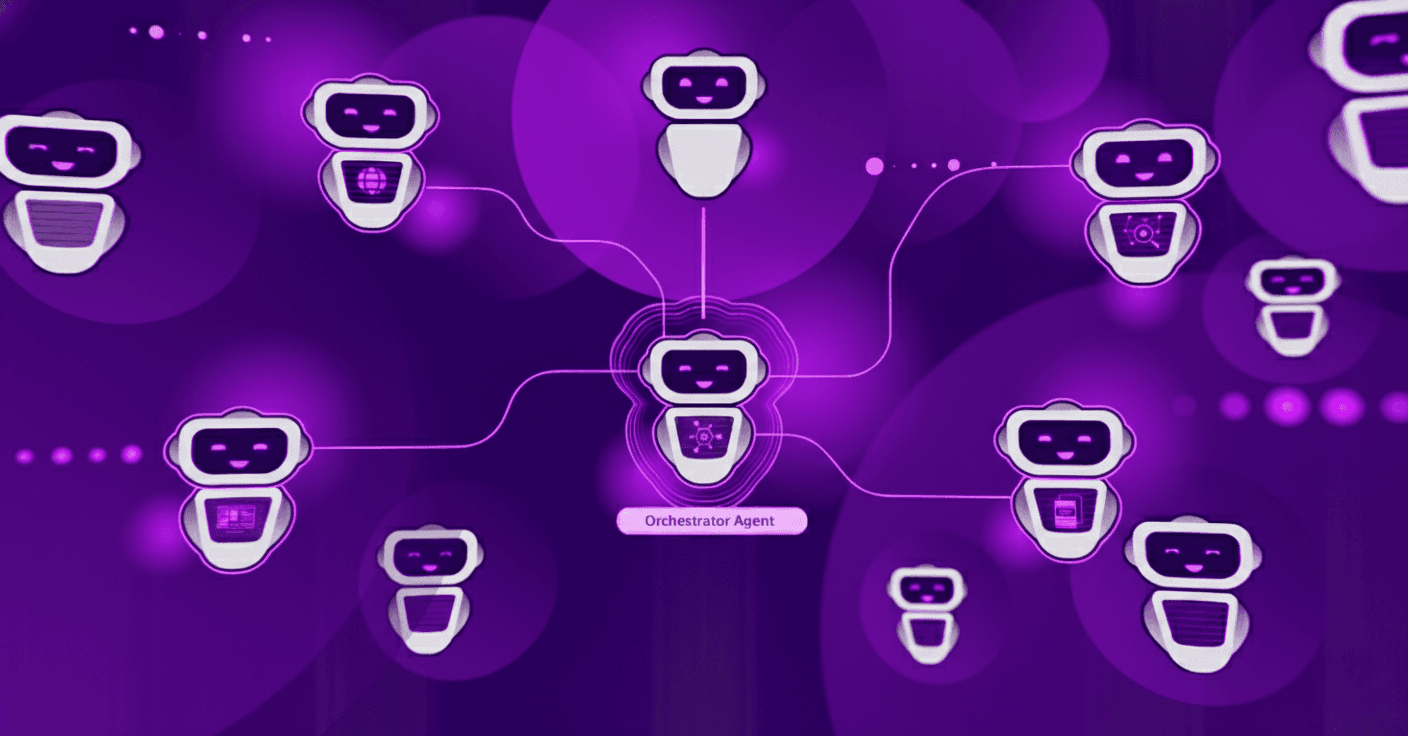
Agentic AI represents the most significant advancement. These autonomous agents integrate into enterprise applications and operate with minimal human oversight. Deloitte projects that autonomous AI agents will integrate into 40% of enterprise applications by the end of 2026, up from less than 5% in 2025. These agents handle complex workflows that previously required human judgment.
The platforms also provide transparency. Modern AI automation tools explain their decisions through audit trails and confidence scores. This visibility helps teams trust automated processes and identify when human intervention is needed.
How AI Automation Works
AI automation systems operate through a continuous cycle of data collection, analysis, decision-making, and execution. The process starts when the system receives input through sensors, databases, or user interfaces. Machine learning models analyze this data against historical patterns to identify the appropriate response.
Core Components
The foundation includes data infrastructure that stores and processes information at scale. Machine learning models trained on historical data power the decision engine. Integration layers connect to existing business systems like CRM platforms, ERPs, and communication tools. The orchestration layer coordinates multiple automated tasks into complete workflows.
Data Flow
Information moves through the system in stages. Raw data enters through APIs or direct integrations. Preprocessing cleans and structures the data for analysis. The AI model evaluates the data and generates predictions or recommendations. The automation engine executes actions based on these outputs. Feedback loops capture results to retrain models and improve accuracy.
Key Processes
Voice AI exemplifies the technology's reach. Phenom reports that 72% of organizations are using generative AI in business functions, driving trends like voice AI, projected to reach 8 billion AI-powered voice assistants by 2026. These assistants handle customer inquiries, schedule meetings, and process orders through natural conversation.
Benefits of AI Automation
Organizations implementing AI automation report measurable improvements across operations. The technology delivers value through multiple channels:
Productivity gains: PwC expects AI to improve employee productivity by 40%, freeing workers from repetitive tasks
Faster ROI: Deloitte found that 80% of organizations achieve ROI within 12 months of implementing AI automation
Cost reduction: Automated processes eliminate manual errors and reduce labor costs for routine tasks
Scalability: Systems handle volume spikes without adding headcount
The financial impact extends beyond direct cost savings. Companies using automation report working faster and making better decisions with real-time data analysis. Customer satisfaction improves when AI handles routine inquiries instantly while routing complex issues to human specialists.
Challenges of AI Automation
Implementation failures remain common despite the technology's maturity. Forrester reports that 80-95% of AI projects fail to scale, with only 1% of companies achieving full AI maturity. These failures stem from predictable issues.
Key obstacles include:
Skills gap: Deloitte found that 67% of employees report receiving no AI training, contributing to project abandonment
Data quality: AI models require clean, structured data that many organizations lack
Integration complexity: Connecting AI systems to legacy infrastructure creates technical debt
Change resistance: Teams resist new workflows when implementation disrupts established processes
The talent shortage hits hardest. Organizations need data scientists to build models, engineers to deploy them, and business analysts to identify automation opportunities. Finding professionals with all three skill sets proves difficult in competitive markets.
AI Automation Tools
The market offers hundreds of specialized platforms. Thunderbit lists approximately 554 AI automation tools in major directories, with 60% of companies using automation tools operationally. This fragmentation creates selection challenges.
Leading platforms fall into several categories. Robotic process automation tools like UiPath and Automation Anywhere handle repetitive desktop tasks. Workflow automation platforms like Zapier and Make connect cloud applications. AI-native platforms like OpenAI's GPT models and Anthropic's Claude power conversational interfaces and content generation.
Enterprise adoption is accelerating. PwC projects the global automation market will reach approximately $226.8 billion in 2026. This growth reflects expanding use cases beyond early adopters in tech and finance into healthcare, manufacturing, and retail.
Getting Started with AI Automation
Successful implementations follow a structured approach. Organizations that rush deployment without planning face the highest failure rates. The process requires careful assessment before technology selection.
Identify Business Needs
Start by mapping processes that consume significant time or generate frequent errors. Look for tasks with clear inputs and outputs. Customer support ticket routing, invoice processing, and data entry are common starting points. Quantify the current cost in hours and error rates to establish baseline metrics.
Research Technologies
Evaluate platforms based on integration requirements and team capabilities. Cloud-based solutions reduce infrastructure overhead but may raise data security concerns. Open-source tools offer customization at the cost of internal expertise. Phenom notes that 67% of organizations plan to increase investments in AI automation over the next three years, creating vendor competition that benefits buyers.
Select and Implement
Begin with a limited pilot that delivers value within 90 days. Choose a process with measurable outcomes and manageable scope. Train a core team on the platform before expanding to other departments. Monitor performance metrics weekly and adjust configurations based on results. Scale successful pilots gradually rather than attempting enterprise-wide deployment.
Future of AI Automation
Investment in AI automation is accelerating across industries. Forrester projects global AI spending will exceed $2.02 trillion in 2026, with significant focus on agentic AI technologies. This capital is funding breakthroughs in autonomous decision-making and multi-agent collaboration.
Several trends are reshaping the landscape:
Multimodal AI that processes text, images, and audio simultaneously for richer context
Edge automation that runs AI models on local devices for faster response times
Explainable AI that provides transparent reasoning for automated decisions
Industry-specific models trained on vertical data for higher accuracy in specialized domains
The economic impact will be substantial. PwC estimates AI could contribute up to $15.7 trillion to the global economy by 2030. This growth will come from productivity gains, new product categories, and expanded market access through automated customer engagement.
Real-World Examples of AI Automation
Healthcare organizations are leading adoption in specific use cases. Phenom reports that 90% of healthcare organizations use automated candidate nurturing in recruitment. These systems screen applications, schedule interviews, and answer candidate questions without HR intervention.
Financial services firms use AI automation for fraud detection and loan processing. Models analyze transaction patterns in real time to flag suspicious activity. Underwriting systems evaluate loan applications by assessing creditworthiness across hundreds of data points. These processes that once took days now complete in minutes.
Manufacturing companies deploy computer vision systems for quality control. Cameras inspect products on assembly lines and identify defects faster than human inspectors. Deloitte found that AI agents can drive a 25% productivity increase in these environments by reducing inspection time and catching defects earlier in production.
Conclusion
AI automation has evolved from experimental technology to essential infrastructure for competitive organizations. The systems now handle complex tasks that require judgment and adaptation, not just simple repetitive work.
For United States businesses evaluating their automation strategy, the window for early-mover advantage is closing. Companies that build AI capabilities now will compound their efficiency gains while competitors struggle with implementation challenges. The investment pays off through reduced costs, faster operations, and improved customer experiences.
Frequently Asked Questions
What is the average cost of implementing AI automation in the United States?
Implementation costs vary widely based on scope and platform selection. Cloud-based solutions start at a few hundred dollars monthly for small teams, while enterprise deployments range from $50,000 to $500,000 annually. United States companies typically see positive ROI within the first year through labor cost reduction and error elimination. Custom development adds significant expense but provides competitive differentiation.
How does AI automation affect employment in the United States?
AI is expected to displace 75 million jobs globally while creating 133 million new jobs by 2025, resulting in a net gain of 58 million jobs according to PwC. In the United States, job displacement concentrates in routine administrative and data entry roles. New positions emerge in AI training, system maintenance, and process optimization. Workers who develop AI literacy transition more successfully.
Can small businesses benefit from AI automation?
Small businesses gain competitive advantages through AI automation by accessing capabilities previously available only to large enterprises. No-code platforms eliminate the need for data science teams. Cloud pricing models allow companies to start small and scale based on results. Customer service chatbots, automated bookkeeping, and marketing personalization deliver measurable value at accessible price points for teams under 50 employees.
How does AI automation compare to traditional robotic process automation?
Traditional RPA executes predefined rules and breaks when processes change. AI automation adapts to variations through machine learning and handles unstructured data like emails and documents. RPA works best for stable, high-volume tasks with consistent inputs. AI automation excels when processes require judgment, language understanding, or pattern recognition. Many organizations use both technologies together for comprehensive coverage.
What technical infrastructure is required to deploy AI automation?
Modern AI automation platforms run in the cloud and require minimal on-premise infrastructure. Organizations need reliable internet connectivity, data storage systems, and integration capabilities with existing business applications. API access to core systems like CRM and ERP platforms is essential. Teams should have basic data management practices in place before deployment. Cloud providers handle compute resources and model hosting, reducing technical barriers for implementation.
BLOGS