5 Key Benefits of Custom AI Applications for Businesses
Feb 27, 2026

5 Key Benefits of Custom AI Applications for Businesses
Struggling to justify the cost of building custom AI when off-the-shelf tools seem easier? US enterprises waste millions on generic solutions that fail to address their unique workflows. Custom AI applications deliver measurable ROI, with 86% of production users reporting at least 6% revenue growth in 2026.
Introduction
Generic AI tools promise quick wins, but they rarely fit your business processes. Custom AI applications solve this problem by tailoring machine learning models to your specific data, workflows, and goals. Unlike one-size-fits-all platforms, these solutions integrate directly into your existing systems.
The market reflects this shift. The global AI app market reached USD 7.24 billion in 2026, up from USD 5.23 billion in 2025. This 38.51% growth rate shows businesses are moving beyond generic tools. Custom applications deliver competitive advantages that pre-built software cannot match.
What Are Custom AI Applications?
Custom AI applications are software solutions built specifically for your business needs using machine learning and artificial intelligence. They aren't packaged products you download. Instead, developers design them around your data, processes, and objectives.
These applications use large language models or generative AI tailored for specific tasks. By the end of 2026, 40% of enterprise applications are expected to include task-specific AI agents, up from under 5% in 2025. This rapid adoption shows how businesses are moving from generic tools to purpose-built solutions.
Key characteristics include:
Task-specific training: Models learn from your proprietary data
Workflow integration: Connects directly to existing systems and databases
Scalable architecture: Grows with your business needs
Continuous improvement: Learns and adapts over time
Key Features of Custom AI Applications
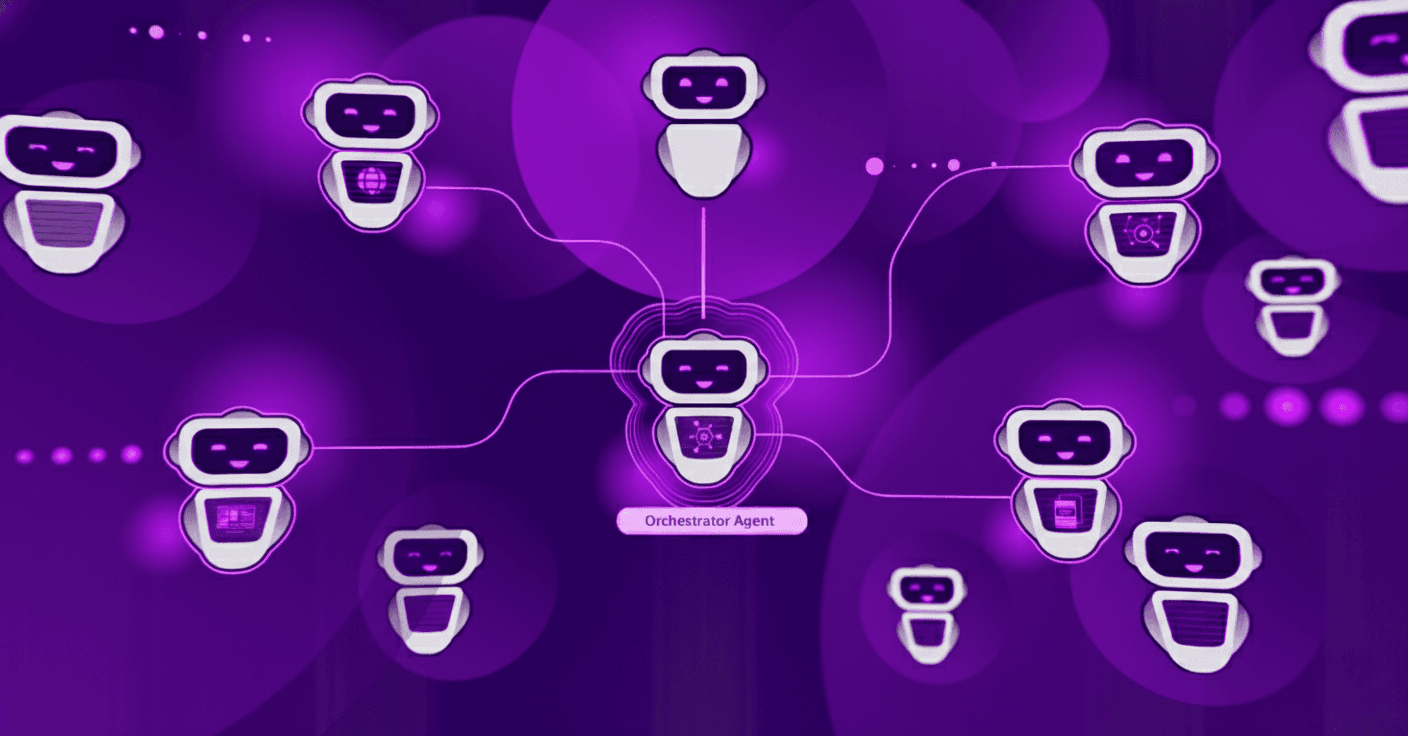
Custom AI applications in 2026 focus on autonomy and personalization. The most impactful feature is agentic AI for autonomous task execution. These systems make decisions and take actions without constant human oversight.
Hyper-personalization is another critical capability. Custom applications analyze individual user behavior to deliver tailored experiences. This goes beyond basic segmentation to true one-to-one customization.
The results speak for themselves. 86% of production users of custom AI applications report at least a 6% revenue growth. This performance gap between custom and generic solutions drives the shift toward tailored development.
How Custom AI Applications Work
Custom AI applications process data through specialized models trained on your business information. They integrate with your databases, APIs, and workflows to automate tasks and generate insights. The architecture separates data ingestion, model training, and deployment into distinct layers.
Core Components
The foundation includes three essential elements. First, data pipelines collect and clean information from your sources. Second, machine learning models process this data to identify patterns. Third, APIs connect the AI system to your applications and user interfaces.
92% of Fortune 500 firms have adopted generative AI, indicating widespread integration into business operations. These companies build custom solutions rather than relying solely on vendor platforms.
Data Flow
Information moves through the system in stages. Raw data enters through connectors to your databases and applications. The system then preprocesses this data to ensure quality and consistency. Models analyze the cleaned data to generate predictions or recommendations.
Results flow back to your business systems through APIs. This creates a continuous loop where the application learns from new data and improves its outputs over time.
Key Processes
Training happens on your specific datasets, not generic internet data. This ensures the AI understands your industry terminology, customer behavior, and operational patterns. The system validates outputs against your business rules before taking action.
Deployment occurs within your infrastructure for security and compliance. Updates happen incrementally as the system processes more data and receives feedback from users.
5 Key Benefits of Custom AI Applications
Businesses adopting custom AI applications see measurable improvements across operations. The advantages extend beyond simple automation to fundamental business transformation.
Here are the top benefits:
Productivity gains: Businesses report an average 24.69% productivity boost from generative AI, with AI agents raising productivity by 55%
Revenue growth: 86% of companies using AI in production see revenue growth of 6% or more annually
Competitive differentiation: Custom solutions create unique capabilities competitors cannot replicate
Process optimization: AI identifies inefficiencies humans miss in complex workflows
Cost reduction: Automation eliminates manual tasks while improving accuracy
Applications of Custom AI in Business
Custom AI drives efficiency and customer loyalty across sectors. Marketing leads adoption, with 64% of companies developing generative AI use cases in this function. These applications personalize campaigns, predict customer behavior, and optimize ad spending.
Supply chain optimization represents another major use case. Companies use custom AI to forecast demand, optimize inventory, and reduce logistics costs. Coca-Cola uses custom AI for supply chain optimization, significantly reducing costs according to industry reports.
Customer service applications handle inquiries, route tickets, and provide personalized support. Financial services firms deploy custom models for fraud detection and risk assessment. Manufacturing companies use computer vision for quality control and predictive maintenance.
Challenges in Implementing Custom AI
Implementation failures plague the industry. 95% of custom enterprise generative AI pilots fail to reach production, primarily due to data quality issues and integration challenges. This high failure rate stems from underestimating complexity.
Data quality emerges as the primary barrier. 43-45% of leaders cite data quality and availability as the top obstacle to successful AI implementation. Poor data leads to inaccurate models that produce unreliable results.
Common obstacles include:
Integration complexity: Connecting AI to legacy systems requires significant engineering
Talent shortage: Finding developers with both AI expertise and business knowledge
Cost overruns: Projects frequently exceed initial budget estimates
Change management: Employees resist new workflows and tools
Future Trends in Custom AI Applications
The generative AI market is projected to reach $356.10 billion by 2030, growing at a 46.47% CAGR. This explosive growth reflects increasing business confidence in custom AI solutions. Companies are moving from experimental pilots to production deployments.
Widespread adoption is already here. 88% of companies report AI use in at least one business function. This indicates AI has moved from competitive advantage to business necessity. Companies without custom AI strategies risk falling behind.
Emerging trends include multimodal AI that processes text, images, and video simultaneously. Edge AI brings processing to devices for real-time responses. Explainable AI addresses transparency concerns by showing how models reach decisions. These advances make custom applications more powerful and trustworthy.
Conclusion
Custom AI applications deliver measurable business value through productivity gains, revenue growth, and competitive differentiation. The technology has matured beyond experimental pilots to production systems that transform operations. Companies that invest in tailored solutions see stronger returns than those relying on generic tools.
The challenges are real, particularly around data quality and integration complexity. However, the market trajectory shows businesses are overcoming these obstacles. As adoption spreads and tools improve, custom AI will become standard infrastructure rather than cutting-edge innovation.
Frequently Asked Questions
What is the typical ROI timeline for custom AI applications?
Companies using custom AI in production see revenue growth of 6% or more annually, with productivity gains averaging 24.69% within the first year. US enterprises typically achieve positive ROI within 12-18 months, though complex implementations may take longer depending on data readiness and integration scope.
How do custom AI applications perform in United States markets compared to global deployments?
United States enterprises lead global AI adoption, with 88% of companies using AI in at least one business function by 2026. US firms benefit from robust cloud infrastructure, abundant technical talent, and regulatory frameworks that support innovation while protecting data privacy.
What technical infrastructure is required to deploy custom AI applications?
Custom AI applications require cloud compute resources for model training, secure data storage meeting compliance standards, and API infrastructure for system integration. Most US enterprises use platforms like Azure or AWS, with compute costs scaling based on model complexity and data volume processed.
How do custom AI applications compare to off-the-shelf AI tools?
Custom applications deliver 55% higher productivity gains through AI agents compared to generic tools, according to 2026 benchmarks. While off-the-shelf solutions offer faster deployment, custom applications provide unique competitive advantages by learning from proprietary data and integrating with specific workflows that generic platforms cannot replicate.
What are the main barriers preventing custom AI projects from reaching production?
Data quality and availability issues cause 95% of enterprise generative AI pilots to fail before production deployment. US companies face additional challenges including integration complexity with legacy systems, shortage of AI talent with business domain expertise, and change management resistance from employees adapting to new AI-powered workflows.
BLOGS